You're moving $5,000 in credit card debt to a 0% intro APR card to save on interest. The card charges a "3% balance transfer fee."
Most people barely register that line during the application. It's $150. Always factor that in — the math on whether a balance transfer makes sense depends entirely on whether the interest you save outweighs the fee you pay.
Here's how to think about it.
How balance transfer fees actually work
The fee is calculated as a percentage of the amount you transfer. It's added to your new card's balance — you don't pay it separately, and you don't pay it upfront. It's just baked into what you owe on the new card.
Standard fee structures across the industry:
- 3% with a $5 minimum — typical for shorter intro periods (12-15 months)
- 5% with a $5 minimum — typical for longer intro periods (18-21 months)
- 0% — rare, but exists on a few cards (more on this below)
Some cards charge different fees based on when you do the transfer:
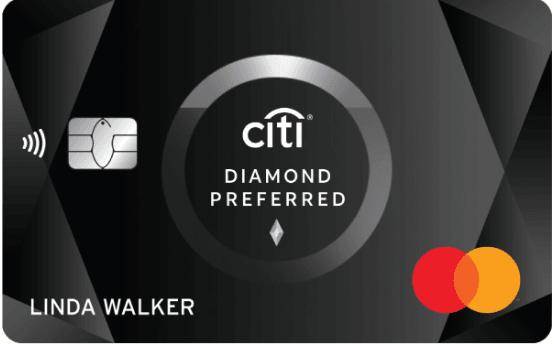
- 3% if you transfer within 60 days of opening, 5% after — Citi Diamond Preferred uses this structure
- 0% for transfers in the first 60 days, then 3% — Edward Jones credit card and a few credit unions
Read the fine print on whichever card you're considering. The headline rate (3%) usually has conditions that affect whether you'll actually pay that.
The math on whether the fee is worth it
The fee is worth paying if you'd otherwise pay more in interest during the time you're carrying the balance. Let me show the math.
Scenario: $5,000 balance currently at 22% APR. You transfer it to a card with 0% APR for 18 months and a 3% fee.
- Transfer fee: $5,000 × 3% = $150 added to your balance
- Interest you would have paid (if you carried $5,000 for 18 months at 22%): roughly $1,400-1,800 depending on how aggressively you'd pay it down
- Interest you'll pay during the intro period: $0
You're up roughly $1,250-1,650 even after the fee. Easy decision.
The math gets tighter when:
- Your current APR is lower (say, 14% — common at credit unions)
- Your balance is small (under $1,500)
- You'd pay it off quickly anyway (in 6 months or less)
Quick test: Take your current APR, divide by 12, multiply by your balance, multiply by the months you'd carry the balance. If that number is bigger than the transfer fee, the math works.
Which cards skip the balance transfer fee
A handful of cards don't charge a transfer fee at all. They're worth knowing about.
- Wings Financial Visa Platinum (credit union) — no fee, but you have to be a Wings member
- Navy Federal Platinum Card — no transfer fee for active military or Navy Federal members
- PenFed Promise Visa — no fee, must be PenFed member
- First Tech Choice Rewards World Mastercard — credit union, must be member
- Edward Jones Personal Credit Card — 0% fee for transfers in first 60 days
Notice the pattern: no-fee balance transfers are mostly credit union cards. The big national banks (Chase, Citi, Bank of America, Wells Fargo, Discover) all charge balance transfer fees. The credit unions can offer lower fees because they have less marketing overhead and a different business model.
Membership at most credit unions is easier than people think — many let you join through a small donation to an affiliated nonprofit, or by living in a particular state, or by being related to anyone who's a member.
Compare: paying the fee vs joining a credit union
For a $10,000 balance:
- Path A: Citi Diamond Preferred (5% transfer fee) — Fee = $500. 21 months at 0% APR. Need to pay $477/month to clear it before the intro ends.
- Path B: Wings Financial Visa Platinum (0% fee) — Fee = $0. 12 months at 0% APR. Need to pay $834/month to clear it before the intro ends.
Path A costs you $500 upfront but gives you 9 more months to pay. Path B saves the $500 but compresses the timeline.
Which is better depends on your cash flow. If you can comfortably do $834/month, Path B saves you $500. If $477/month is your max, Path A is the only one that works.
What about cards advertised with 0% balance transfer fees that aren't credit union cards?
You'll see some major-bank cards advertise "no balance transfer fee" or "intro fee waived" on certain promotions. Check the fine print carefully:
- The 0% fee usually only applies to transfers within a specific window (often 60 days from account opening)
- After the window, the standard fee returns (typically 3-5%)
- Some "0% fee" offers come with shorter intro APR periods (12 months instead of 18-21)
These can be legitimate deals, but they're usually time-limited and conditional. If you see an offer like this, act quickly — they tend to be promotional and don't last forever.
The fee is added to your balance, not paid upfront
This trips people up. You transfer $5,000 with a 3% fee. After the transfer posts, your new card shows a balance of $5,150, not $5,000.
This means:
- The fee accrues 0% APR during the intro period (good)
- But it counts against your credit limit (bad if you're near the limit already)
- And you have to pay it off along with the rest of the balance
Make sure your credit limit on the new card is high enough to absorb the transferred amount plus the fee. Most issuers won't approve a transfer that would push you over your credit limit.
Bottom line
A 3-5% balance transfer fee sounds steep, but it's almost always worth it if you're escaping a 20%+ APR. Run the math: divide your current APR by 12, multiply by your balance, multiply by the months you'd carry the balance. That's the interest you avoid by transferring.
If that number beats the transfer fee — and it usually does for any meaningful balance — the fee is worth paying.
If you can join a credit union with a no-fee balance transfer card, even better. The savings on the fee plus the promotional intro APR can save you a lot of money on a serious balance.
Don't transfer just to transfer. Make sure you have a real plan to pay it off during the intro period, or you'll end up paying interest on the new card's regular APR after the intro ends — which puts you back where you started.