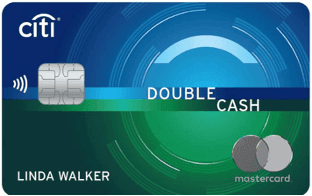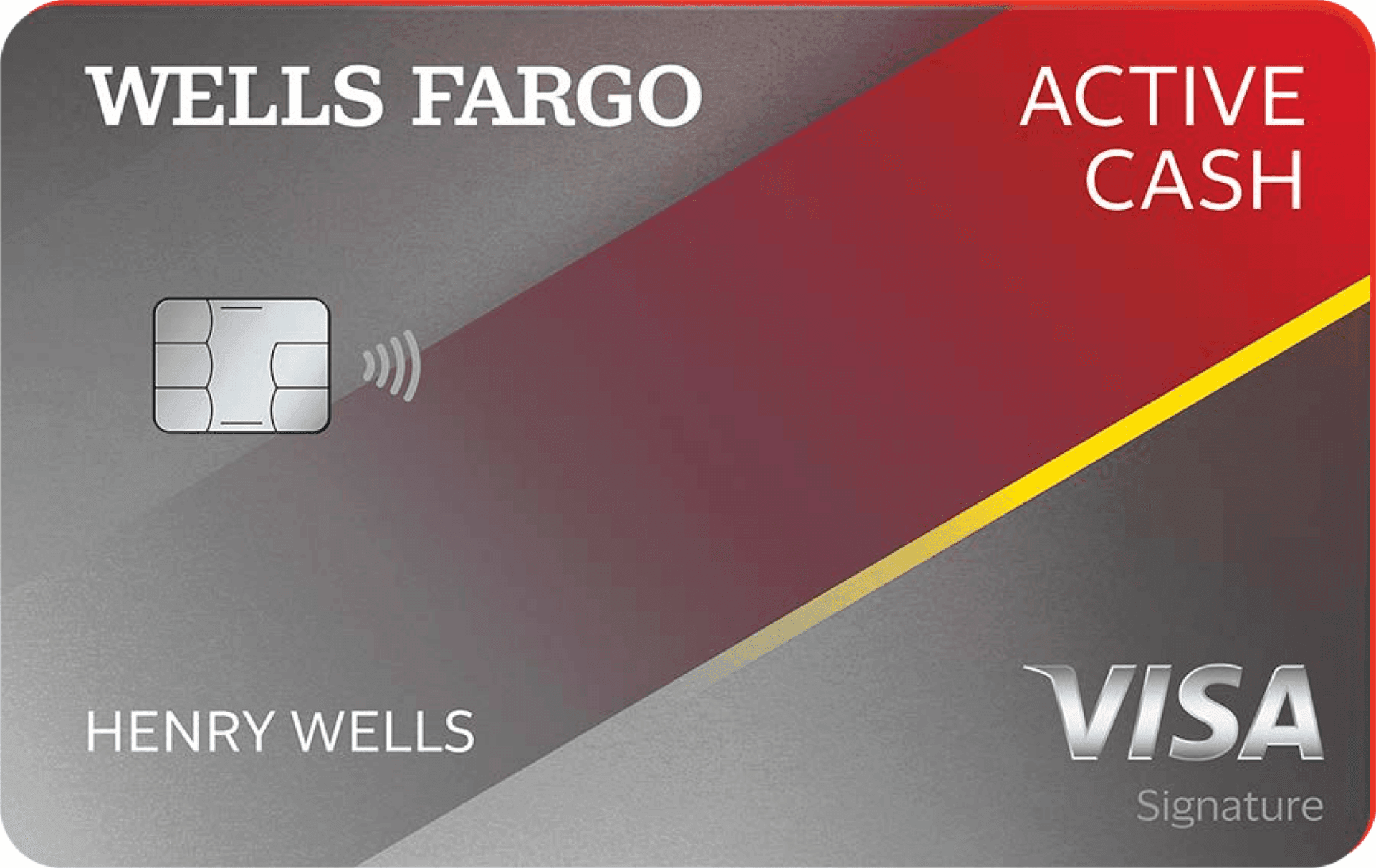
When you ask "what's the best 2% cash back card with no annual fee," two answers come up almost every time: the Citi Double Cash and the Wells Fargo Active Cash. They're functionally similar — same rewards rate, same target user, same credit profile required for approval. But they're not identical, and the differences matter for specific use cases.
Here's how to actually choose.
At a glance
| Active Cash | Double Cash | |
|---|---|---|
| Annual fee | $0 | $0 |
| Welcome bonus | $200 after $500 in 3 months | $200 after $1,500 in 6 months |
| Base rewards rate | 2% on everything | 1% when you buy + 1% when you pay (= 2%) |
| Intro APR (purchases) | 0% for 12 months | None |
| Intro APR (balance transfers) | 0% for 12 months | 0% for 18 months |
| Foreign transaction fee | 3% | 3% |
| Regular APR | 18.49%–28.49% Variable | 17.49%–27.49% Variable |
Both earn 2% on every purchase. Both have $0 annual fees. Both charge 3% on foreign transactions. The interesting differences are in the intro APR offers, the welcome bonus structure, and how the rewards are actually paid out.
The "1% + 1%" structure on the Double Cash
The Double Cash pays you 1% when you make a purchase and another 1% when you pay for that purchase. Pay your bill on time and you eventually get the full 2%. Pay late, and you forfeit some of the second 1% until you're caught back up.
In practice this is a wash for anyone who pays in full each month — same 2% as the Active Cash. But it adds a small cognitive overhead: the rewards aren't immediately credited at the time of purchase, and if you ever miss a payment, you're penalized on rewards as well as APR.
The Active Cash is cleaner: you spend, you earn 2%, full stop.
Welcome bonus: speed vs spend
Both cards offer $200, but the path to earning it is different:
- Active Cash: $500 in 3 months
- Double Cash: $1,500 in 6 months
Active Cash is dramatically easier. $500 over 90 days is roughly $170/month — most people clear that just on groceries and gas without thinking. The Double Cash's $1,500 over 6 months is $250/month, also achievable but a much higher bar relative to the same payout.
If you're picking a card just to grab the welcome bonus before deciding what to do long-term, the Active Cash gets you there twice as fast.
Intro APR: this is where they diverge
The most important real difference is the intro APR offer:
Active Cash: 0% on purchases AND balance transfers for 12 months. Versatile — good for a planned big purchase, decent for a smaller balance transfer, useful for both at once.
Double Cash: No intro APR on purchases. 18 months 0% on balance transfers. Clearly built for one purpose: paying down existing high-interest debt without paying interest while you do it.
If you're doing a balance transfer of any meaningful size, the Double Cash's extra 6 months of 0% APR is a much bigger deal than 6 months of equivalent purchase APR. On a $5,000 balance, those 6 extra months at 0% — vs the alternative of 22%+ APR after the Active Cash's 12 months expire — saves you about $550 in interest if you can't pay it off in time.
If you're not doing a balance transfer, the Active Cash's purchase intro APR is more useful (you can finance a large planned purchase interest-free for the year).
Regular APR after the intro period
Double Cash: 17.49%–27.49% Active Cash: 18.49%–28.49%
A point lower on the Double Cash on average. Marginal in absolute terms, but if you're someone who occasionally carries a balance, that 1% adds up over time. Of course, if you're regularly carrying a balance on a credit card, the actual answer is "neither — you should be using a 0% intro APR card or a personal loan."
Foreign transaction fees: both lose
Both cards charge 3% on foreign transactions. Neither is a good choice for international travel. If you travel internationally, look at the Capital One Quicksilver (1.5% with no foreign transaction fee) or the Capital One Venture (2x miles with no foreign transaction fee, $95 annual fee).
Customer service and ecosystem
Citi: solid online banking, decent app, well-established. Wells Fargo: also solid online banking, good app. Has had reputational issues over the years (the 2016 fake-accounts scandal lingers in customer perception), but as a credit card issuer specifically, the experience has been fine.
Both let you product-change to other cards in their lineup if your needs evolve — Active Cash to Reflect (balance transfer card) or Autograph (rewards card); Double Cash to other Citi products. Useful flexibility either way.
When each card actually wins
Get the Active Cash if:
- You want the welcome bonus quickly with minimal spend pressure
- You're financing a large planned purchase and want 12 months interest-free
- You want the simplest possible 2% earn structure
- You don't have existing credit card debt to transfer
Get the Double Cash if:
- You're doing a balance transfer (the 18-month 0% APR is a real advantage)
- You don't mind the slightly more complex earn structure
- You'd rather have the slightly lower regular APR
Get both:
- If you can earn both welcome bonuses without straining your spending
- Use the Double Cash for a balance transfer, the Active Cash for new purchases
- Once both are open, use whichever has the better fit for each use case
For most people, most of the time, the Active Cash is the smoother pick — same 2% with less friction, easier welcome bonus, and a useful purchase intro APR. The Double Cash is the better choice in the specific case of an active balance transfer, which is also the case where the choice matters most.