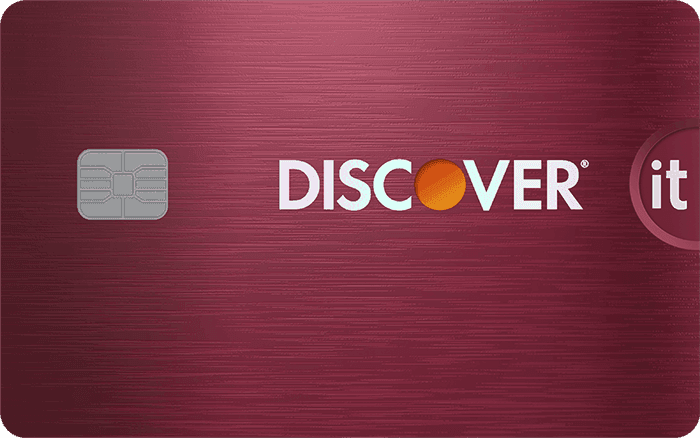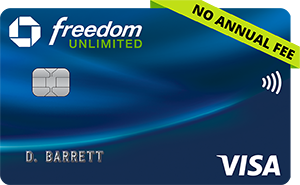
Two of the most popular no-fee cash back cards on the market, with completely different earning structures.
The Discover it Cash Back uses rotating quarterly 5% categories with first-year cashback match. The Chase Freedom Unlimited is a flat-rate 1.5% card with bonus categories baked in. They appeal to different people and earn rewards in different ways.
Here's the side-by-side breakdown.
The cards at a glance
| Discover it Cash Back | Chase Freedom Unlimited | |
|---|---|---|
| Annual fee | $0 | $0 |
| Welcome bonus | Cashback Match (matches all cash back you earn in year 1) | $200 after $500 in 3 months |
| Base earn rate | 1% on everything | 1.5% on everything |
| Bonus categories | 5% on rotating quarterly categories (up to $1,500/quarter) | 3% on dining and drugstores, 5% on Chase Travel |
| Foreign transaction fee | None | 3% |
| Network | Discover (less accepted internationally) | Visa (universally accepted) |
| Year 1 effective rate | 2% baseline / up to 10% in bonus categories | 1.5%-3% / 5% Chase Travel |
The cards take fundamentally different approaches. Discover bets you'll engage with their rotating categories and treats year one as a marketing program. Chase keeps it simple and competitive year-round.
Discover's first-year Cashback Match — explained properly
This is the headline marketing on the Discover it Cash Back, and it's worth understanding precisely.
At the end of your first year as a cardholder, Discover doubles all the cash back you earned during that year. They calculate it automatically, and the match shows up as a one-time bonus.
So if you earned $500 in cash back during year 1, Discover gives you another $500 at the end of the year. That's a 100% match on every dollar.
This effectively turns the card's earning rates into:
- 2% on everything (base rate, doubled) for year 1
- 10% on rotating categories (5% × 2) for year 1 — up to $1,500/quarter
These are extraordinary rates for a no-fee card. The catch is they only apply to year 1, after which the card returns to 1% base / 5% rotating.
How the rotating categories work
Each quarter, Discover designates a 5% bonus category. Past examples:
- Q1: Restaurants, gas
- Q2: Grocery stores, drugstores
- Q3: Gas, restaurants, Amazon
- Q4: Walmart, Amazon, Target
You have to activate the category each quarter through your account or the Discover app. If you don't activate, you earn 1% (or 2% in year 1) on those purchases instead of 5%.
The 5% rate is capped at $1,500 in spending per quarter. After the cap, you earn 1%. Maximum first-year value from rotating categories: $1,500 × 5% × 4 quarters = $300, doubled to $600 at the year-end match.
How Chase Freedom Unlimited's earning works
Chase keeps it simpler. No quarterly activations. No rotating categories. Just consistent earning rates:
- 1.5% on everything (base)
- 3% on dining at restaurants (including takeout and delivery)
- 3% on drugstore purchases (CVS, Walgreens, etc.)
- 5% on travel booked through Chase Travel
You earn these rates from day one, no enrollment needed, no caps on the bonus categories.
The Freedom Unlimited's $200 welcome bonus is also more attainable than Discover's match — you just need to spend $500 in 3 months, which is easy.
Year 1: the comparison gets interesting
For someone who spends $2,000/month total ($24,000/year), with rough breakdowns of:
- $400/month dining
- $200/month groceries
- $300/month gas
- $1,100/month other
Discover it Cash Back (year 1, with match):
- Dining: $4,800 × 2% (base, doubled) = $96, but if dining is the rotating category one quarter, $1,200 × 10% + $3,600 × 2% = $192. Average it: ~$120
- Groceries: similar logic if groceries rotates in. ~$60-90
- Gas: similar. ~$80-120
- Other: $13,200 × 2% = $264
Estimated year 1 total: ~$550-650
Chase Freedom Unlimited (year 1):
- Dining: $4,800 × 3% = $144
- Drugstores: typically minimal. ~$10
- Travel: assume $0 booked through Chase Travel
- Other: $19,200 × 1.5% = $288
Plus $200 welcome bonus.
Estimated year 1 total: ~$642
These are very close. Discover edges Chase if you actively track and spend in rotating categories. Chase Freedom Unlimited edges Discover if you don't bother with the activations.
Year 2 onwards: Chase pulls ahead
Without the year-1 match, Discover's earning rate drops back to 1% base / 5% rotating.
Same spending profile, year 2:
Discover it Cash Back (year 2+):
- Rotating bonuses: ~$200-300/year if you optimize and spend in categories
- Everything else: 1% rate. Way worse than Chase's 1.5%.
Estimated year 2 total: ~$330-450
Chase Freedom Unlimited (year 2+):
- Same as year 1 minus welcome bonus.
Estimated year 2 total: ~$440
Chase wins year 2 onwards in most scenarios. The Discover card is heavily front-loaded by the cashback match.
Other differences that matter
International acceptance. Discover is a US-focused network. In Europe and Asia, you'll regularly find merchants that don't accept Discover. Visa (Chase) is accepted nearly universally worldwide.
Foreign transaction fees. Discover doesn't charge them; Chase Freedom Unlimited does (3%). Worth noting if you travel — although Discover's lower acceptance rate often means you can't use the card abroad anyway.
Customer service. Discover consistently ranks at the top of credit card customer service surveys. Chase is decent but not as universally praised. If you'd actually call customer service, Discover is friendlier.
Travel insurance. Chase Freedom Unlimited offers some basic travel insurance (trip cancellation, baggage delay). Discover offers very little here.
Points portability. Chase Freedom Unlimited's "cash back" is technically Chase Ultimate Rewards points. If you ever own a Chase Sapphire Preferred or Reserve, those points become eligible for transfer to airline partners worth 1.5-3+ cents each. Discover's cash back is just cash back — no transfer options.
Who should pick which
Get the Discover it Cash Back if:
- You're new to credit cards and want the year-1 match (effectively double rewards on everything)
- You're willing to activate quarterly categories
- You don't travel internationally much
- You like Discover's customer service reputation
- You're considering it as a one-year card (heavily benefit year 1, then either keep or move on)
Get the Chase Freedom Unlimited if:
- You want consistent rewards without quarterly activations
- You travel internationally and need wider acceptance
- You spend significantly on dining
- You might eventually upgrade to a Chase Sapphire card (your points can transfer to airline partners)
- You're under the Chase 5/24 limit
Get both if:
- You like rewards optimization and can manage two cards
- You can use Chase as your "everywhere" card and Discover as your "5% category" card
- You're willing to swap which one you use based on the quarter
The Chase 5/24 consideration
If you're working toward a Chase Sapphire Preferred or Sapphire Reserve, opening either of these cards burns a slot toward Chase's 5/24 limit. Plan accordingly.
If you'd open both, the Discover doesn't count toward Chase's 5/24 (only Chase tracks 5/24 — but every card you open from any issuer counts toward your Chase 5/24 number). So the Discover would count toward your 5/24 calculation when you next apply for Chase, but Chase doesn't penalize you for already having a Discover card; they just count it.
Bottom line
For year 1 alone, Discover's Cashback Match is genuinely hard to beat — you're earning 2% on everything and 10% on rotating categories. That's better than almost any no-fee card.
For year 2 onwards, Chase Freedom Unlimited's flat 1.5% wins handily over Discover's 1% base rate, especially if you're not optimizing rotating categories.
Smart play: get the Discover for year 1, use it heavily, capture the match, then switch most of your spending to the Freedom Unlimited and keep Discover open as your "5% category" card during the quarters where it matters.