The honest answer to "is the annual fee worth it" isn't yes or no — it's a math problem most people skip. People either reflexively avoid annual fees ("free is free") or reflexively justify them ("I get so much value!"), and both approaches end up wrong about half the time.
The right way to think about it: an annual fee is worth paying when the card's actual benefits to you exceed the fee plus the value you'd get from the best free alternative. Both halves of that comparison matter, and most people only do half the math.
The break-even calculation
Here's the framework. Three numbers:
- A = annual fee of the card you're considering
- B = realistic dollar value of that card's rewards and credits, given how you actually spend
- C = realistic dollar value of the best no-annual-fee alternative for the same spending
The card is worth the fee when B − C > A. That's it.
The mistake most people make is comparing only A and B — "I get $400 in benefits, the fee is $95, so it's worth $305." But you'd get something from a free card too. The real question is how much more you get from the paid card. That's B − C.
Worked example: Chase Sapphire Preferred
The Sapphire Preferred has a $95 annual fee. Marketing claims include 5x on Chase Travel, 3x on dining, $50 in annual hotel credit, 25% point bonus when redeemed through Chase Travel, no foreign transaction fees, plus the welcome offer.
Let's say you spend $400/month on dining and $200/month on travel through Chase Travel. That's $4,800 dining (×3 = 14,400 points) and $2,400 travel (×5 = 12,000 points), for 26,400 points/year. At 1.25¢ each through Chase Travel, that's $330.
Plus the $50 hotel credit, you're at $380 in benefits.
Now the alternative: the Chase Freedom Unlimited (no annual fee) earns 5% on Chase Travel and 3% on dining as cash back. Your same spend earns:
- $4,800 dining × 3% = $144
- $2,400 travel × 5% = $120
Total on the free alternative: $264.
Difference (B − C): $380 − $264 = $116 in extra value. The fee is $95. So the Sapphire Preferred is worth it for this spending profile by about $21/year. Real, but barely.
If your dining and travel spend were lower — say $200/month dining, $100/month travel — the math flips. The Sapphire Preferred only beats the Freedom Unlimited by about $30, which doesn't cover the $95 fee. The free card wins.
When premium fees clearly win
The math works strongly in favor of premium cards in two situations:
Heavy travel spend, especially booking through portal. Cards like the Venture X ($395 annual fee) include a $300 annual travel credit that just covers itself if you book any travel through Capital One Travel. Add Priority Pass lounge access (probably worth $200/year if you actually use lounges) and the math is positive before you even count the rewards rate. People who fly 6+ times a year get genuine value here.
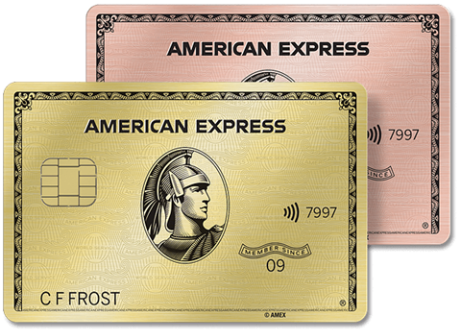
Dining-heavy spend. The American Express Gold Card ($325 annual fee) earns 4x Membership Rewards points at restaurants worldwide. At a conservative 1.5¢ per point, that's a 6% return on dining. If you spend $1,000/month on restaurants ($12,000/year), that's $720 in points alone — even after the fee, you're way ahead. Plus dining and Uber credits.
Credits you'd already use. If a card has a $120/year streaming credit and you already pay $120/year for streaming, that's not a perk worth $0 to you (because you'd pay it anyway), but it's a real $120 offset against the annual fee. Treat manufactured credits at face value only when you'd actually use them; treat them at zero when you wouldn't.
When premium fees don't make sense
You should stick with no-annual-fee cards if:
- You don't spend $5,000+/year in the card's bonus categories
- You don't travel enough to use travel credits or lounge access
- You'd have to change your spending to get value (e.g., "I'd start using DoorDash to use the credit") — that's not extra value, that's just spending more
- You forget to use the credits ("I always meant to claim my $200 airline credit") — paying $400 to get $200 you never claim is just paying $400
The honest test: if you'd be embarrassed to track what value you actually realize from a card, you're probably not realizing enough.
The "I'll downgrade if it's not worth it" backstop
Most premium cards can be downgraded to a no-annual-fee version of the same product line without closing the account or hurting your credit:
- Sapphire Preferred → Freedom Flex or Freedom Unlimited
- Sapphire Reserve → Freedom Flex or Freedom Unlimited
- Amex Gold → Blue Cash Everyday
- Amex Platinum → Blue Cash Everyday or Green Card
- Venture X → VentureOne or Quicksilver
- Venture → VentureOne or Quicksilver
This is called a product change. Call the issuer's retention line, ask to downgrade, done. You keep your account history (good for credit score), you stop paying the fee, and you keep some level of benefits with the no-fee version.
The catch: you can usually only earn the welcome bonus once per product, so if you downgrade and later want to upgrade again to chase the bonus, that may not be allowed (Amex's "once in a lifetime" bonus rule, Chase's 5/24 and 48-month rules, etc.).
Retention offers: the move most people miss
When the second annual fee hits, before you cancel or downgrade, call the issuer's retention department and ask if there's an offer to keep the card. Common offers:
- A statement credit ($50-$200) just for keeping the card open
- Bonus points if you spend a certain amount in 3 months
- A direct fee waiver
Not every call results in an offer, but many do. The card you considered cancelling because the fee was barely worth it might be very worth it with a $200 retention credit attached.
How to decide
Practical workflow before paying any annual fee:
- Estimate your spend honestly in the card's bonus categories. Use the last 12 months from your bank statements or budgeting app, not what you imagine your spending to be.
- Calculate B — total value of the card's rewards and credits at your spend levels, with realistic redemption values (1¢-1.5¢ per point/mile, not the marketing maximums).
- Calculate C — the same spend, what would it earn on the best no-annual-fee alternative.
- Subtract. B − C is your real "extra" benefit.
- Compare to A. If B − C is meaningfully higher than the annual fee, the card is worth it. If it's close, it's not — the cognitive cost of optimizing redemptions, remembering credits, and managing the relationship has its own price.
Cards that pass this math for most people: Active Cash and similar 2% flat-rate cards (free, no math needed). Cards that pass for some people: Sapphire Preferred, Venture X, Amex Gold — but only with the right spending profile. Cards that rarely pass for normal spenders: anything with a fee above $400 unless your travel and dining spend is well into five figures annually.
The annual fee is a fee. It's also fine to pay one when the math says yes.